
You have spent hours moving furniture and carefully washing your floors, yet instead of a fresh scent, your living room now smells like a wet dog or a pile of damp laundry. It’s a disheartening situation that often leads to immediate anxiety about mould growth or the fear that your carpet smells after cleaning because it’s permanently ruined. If you’re a tenant preparing for a final inspection, this unexpected odour can also trigger significant worry about potential deposit deductions and the frustration of wasted effort.
We understand how frustrating it’s when a well-intentioned deep clean backfires. The good news is that these odours occur for very specific, fixable reasons, and it rarely means the material is beyond saving. This guide explains exactly why these smells happen, from trapped bacteria to improper drying techniques, and provides the practical steps needed to restore a fresh scent today. You’ll learn how to identify if your carpet is fixable, how to eliminate the odour immediately, and how to ensure your home remains a truly hygienic and welcoming environment for your family.
Key Takeaways
- Understand why your carpet smells after cleaning, which is usually a result of trapped moisture reacting with organic matter or specific natural fibres.
- Learn how to implement a 24-hour recovery plan that focuses on maximum airflow to eliminate damp odours quickly.
- Identify the signs of “wicking”, a process where deep-seated stains and smells rise to the surface as the carpet dries.
- Discover why DIY rental machines often cause over-wetting and how professional-grade extraction prevents long-term damage.
- Recognise the difference between a temporary damp scent and persistent mould to protect your home hygiene and tenancy deposit.
Understanding the “Wet Dog” Smell: Why Carpets Odourise Post-Clean
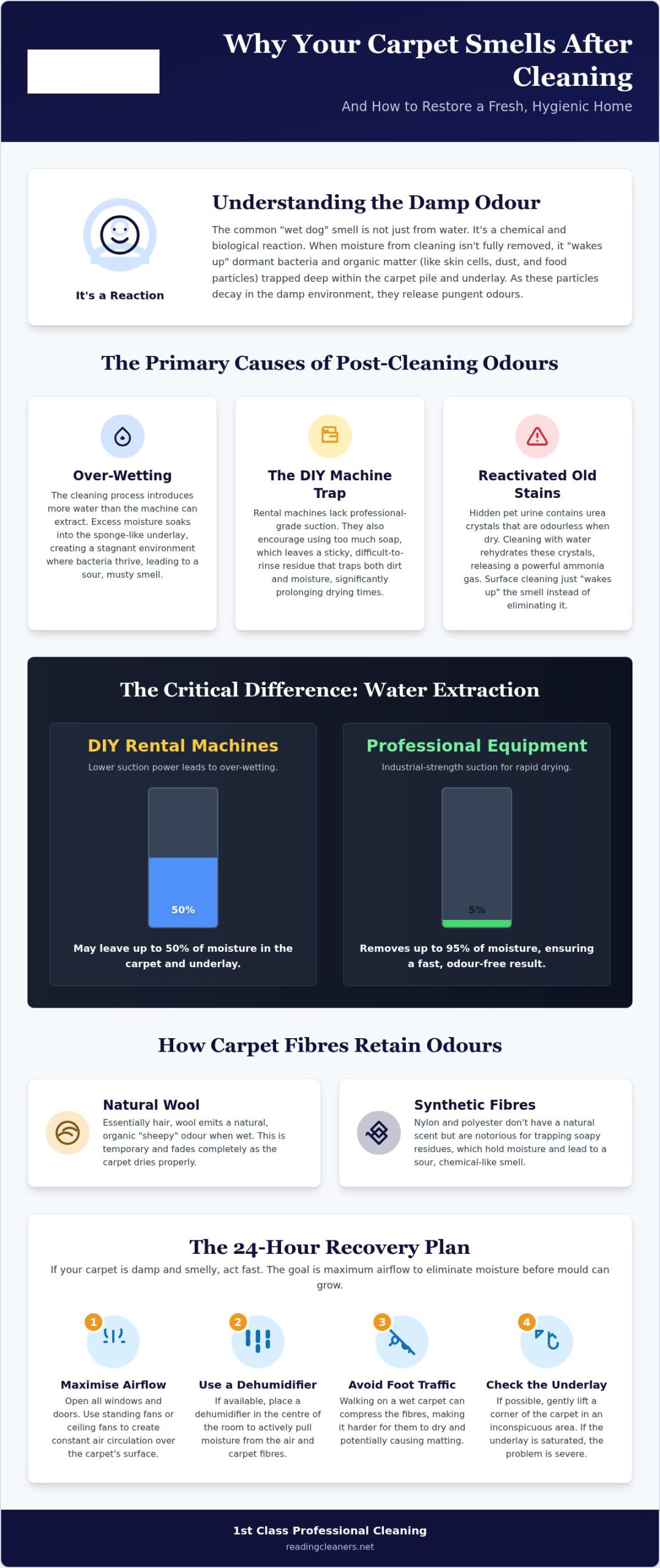
If your carpet smells after cleaning, you’re likely noticing a damp, musty scent often compared to a wet dog. This isn’t just a side effect of water; it’s a chemical and biological reaction. When moisture penetrates deep into the pile, it reacts with organic matter, such as skin cells, dust mites, or old food particles, that weren’t fully extracted. These particles begin to decay when dampened, releasing the pungent odour you’re currently experiencing.
The carpet underlay acts like a giant sponge. Whilst the top fibres might feel touch-dry, the thick padding underneath can hold litres of water if the extraction equipment wasn’t powerful enough. A truly fresh result requires a balance: you must remove the soil and ensure the material dries within a few hours, not days. If the moisture lingers, the underlay becomes a breeding ground for unwanted scents.
The Science of Moisture and Bacteria
Bacteria and fungi are often dormant in the backing of your flooring. When you add water without sufficient suction, these microorganisms “wake up” and begin to multiply. There is a critical 24 to 48-hour window before Mould and Mildew begin to colonise the damp environment. Speed is essential. Off-gassing occurs when damp fibres or microbial colonies release volatile organic compounds into your home’s air. If you find that your carpet smells after cleaning, it’s often a sign that the drying phase has been compromised. If the moisture isn’t removed quickly, the smell will only intensify as the bacteria thrive.
Fibre Types and Odour Retention
Different materials react to moisture in unique ways. Natural wool carpets, for instance, are essentially hair. When wool gets wet, it can emit a natural, “sheepy” organic odour that is quite distinct from a bacterial smell. This is usually temporary and fades as the carpet dries completely. Synthetic fibres, such as nylon or polyester, don’t have an organic scent, but they are notorious for trapping soapy residues. If a cleaning solution isn’t properly rinsed, these residues attract dirt and hold onto moisture, leading to a sour, chemical-like smell. Using pH-balanced cleaning solutions is vital; an alkaline residue left on a wool carpet can actually damage the fibres and cause permanent odour issues.
Common Culprits: From Over-Wetting to Hidden Pet Urine
When a carpet smells after cleaning, the most frequent cause is “over-wetting.” This occurs when the cleaning process introduces more water than the machine can successfully extract. This trapped moisture doesn’t just stay in the fibres; it seeps into the underlay, which acts like a sponge. If the carpet stays damp for longer than 24 hours, the stagnant water begins to sour, leading to that unmistakable musty odour.
The DIY Trap: Why Rental Machines Often Fail
Most homeowners encounter problems when using domestic rental machines. These units are portable and convenient, but they lack the industrial suction power of professional truck-mounted systems. Whilst a professional machine can extract up to 95% of the water used, a DIY unit might leave half of it behind. This leads to a dangerously long drying window.
Another issue is the “shampoo trap.” Users often believe more detergent equals a cleaner carpet. In reality, excess soap creates a sticky residue that’s difficult to rinse out. This residue not only attracts new dirt immediately but also traps moisture within the pile, prolonging the drying time significantly. Following established Carpet and Rug Institute cleaning guidelines helps avoid these common pitfalls by emphasising the importance of proper rinsing and extraction.
The Reactivation of Old Stains
It’s common for a room to smell perfectly fine when dry, only to “stink” the moment it becomes damp. This is usually due to hidden pet urine. When urine dries, it forms concentrated urea crystals (salts) deep within the carpet backing. These crystals are odourless whilst dry. However, the moment you apply water, you re-hydrate those salts.
This re-hydration process releases ammonia gas, which is why the smell suddenly becomes overwhelming. Surface cleaning rarely reaches these deep-seated crystals; it simply wakes them up. If you’re struggling with persistent pet odours, our professional carpet cleaning services use specialised enzymes to break down these salts rather than just wetting them. This ensures the odour is neutralised at the source rather than just masked.
Finally, don’t overlook the machine itself. If a rental unit wasn’t properly sanitised by the previous user, you might be injecting “dirty water” and old bacteria from someone else’s home into your own floors. This can cause a sour, funky smell that is difficult to shift without a thorough, professional re-clean to remove the foreign contaminants. The same principle applies when dealing with other spills that penetrate deep into the pile; for example, if you’ve ever wondered how do I get red wine out of carpet without pushing the pigment deeper into the backing, the answer lies in acting quickly and using the correct blotting technique rather than scrubbing.
The 24-Hour Recovery Plan: How to Rescue a Smelly Carpet
If your carpet smells after cleaning, you are in a race against the clock. The primary goal is to dry the fibres and the underlay before bacteria or mildew can establish a permanent colony. Airflow is your most effective tool in this situation. Many homeowners instinctively reach for heavy perfumes or deodorising powders to mask the scent, but these often complicate the issue by clogging damp fibres and trapping moisture further.
You should act as soon as you notice a musty scent. If the carpet remains damp for more than 48 hours, the risk of permanent damage increases significantly. By following a methodical drying plan, you can often reverse the odour without needing to replace the flooring.
Step-by-Step Drying Strategy
Start by opening windows at opposite ends of the house to create a consistent cross-breeze. This is the fastest way to replace humid, stagnant air with fresher, drier air. In the British climate, it’s also helpful to keep your central heating at a moderate, steady level, around 18 to 20 degrees Celsius. This encourages evaporation without creating a “sauna” effect that could encourage mould growth.
Position box fans or oscillating fans so they point directly at the wettest patches of the floor. This concentrated airflow breaks the surface tension of the moisture. If you can feel water when you press down on the pile, a standard domestic vacuum won’t suffice. Use a wet-dry vacuum for an emergency extraction to pull as much standing water as possible from the deep underlay.
Natural Odour Neutralisers
Whilst the carpet is still slightly damp, you can lightly mist the area with a solution of one part white vinegar to three parts water. Vinegar acts as a natural sanitiser that helps neutralise alkaline residues left behind by cheap detergents. It’s vital not to over-saturate the area; you only want a light misting that will evaporate quickly along with the existing moisture.
It’s a common mistake to apply baking soda to a wet carpet. You must wait until the fibres are 100% dry before using it. If applied to damp carpet, baking soda turns into a thick, gritty paste that is incredibly difficult to remove and can damage your vacuum’s motor. Similarly, avoid store-bought “carpet fresheners” on damp floors. These powders often contain starches that can actually provide a food source for microorganisms if they become trapped amongst the damp pile.
If you’ve followed these drying steps for 24 hours and the carpet smells after cleaning just as strongly as before, it’s time to seek professional help. Persistent odours usually mean the moisture has reached the subfloor or that deep-seated bacteria require industrial-strength sanitisation to be fully eliminated.
Identifying Deep-Seated Issues: Mould, Mildew, and Wicking
If your carpet smells after cleaning and the scent persists despite your best efforts at ventilation, the issue might be deeper than the surface fibres. Persistent odours often indicate that moisture has penetrated the primary backing and reached the subfloor. Whether you have traditional wooden floorboards or a concrete screed, trapped water at this level creates a stagnant environment that is difficult to dry without industrial intervention. When moisture sits against the floor for more than 48 hours, you’re no longer just dealing with a “wet” smell; you’re dealing with a biological one.
When is it Mould?
A standard damp smell is typically sour, similar to a wet towel left in a gym bag. In contrast, mould and mildew produce a distinctively earthy or pungent fungal scent. This isn’t just an aesthetic problem; it’s a health concern. In 2019, damp and mould in English homes were linked to approximately 5,000 cases of asthma and 8,500 lower respiratory infections. If you live in one of Reading’s many Victorian-era properties, you should be particularly cautious. These older buildings often have limited sub-floor ventilation, meaning moisture trapped under the carpet can lead to rotting floorboards or persistent fungal colonies. Standard steam cleaning can inadvertently exacerbate this if the water isn’t extracted immediately, essentially creating a warm incubator for spores to thrive.
Wicking: The Ghost Stains
You might notice brownish or yellow patches appearing as the carpet dries. This is wicking. It happens through capillary action: as the moisture evaporates from the tips of the fibres, it pulls water and the dirt dissolved in it up from the very base of the carpet. This is why a carpet smells after cleaning even if it looks clean on top; you’re essentially smelling the deep-seated soil that has been pulled to the surface. Wicking odours are often more specific than mould, smelling like the original contaminant, such as old pet accidents or spilled drinks, that has been “re-activated” by the water. Liquid spills like wine are particularly prone to causing wicking issues, which is why understanding how to get red wine out of carpet using the correct emergency technique can prevent these deep-set stains from resurfacing later.
To treat these ghost stains without re-wetting the whole room, you can lightly mist the area with a neutralising solution and blot firmly with a dry, white towel. However, for problematic fibres like thick wool or high-pile synthetics, a professional low-moisture clean is often the only way to prevent the cycle from repeating. If you suspect moisture has reached your subfloor or you’re seeing persistent stains, it’s best to book a professional carpet cleaning service to ensure the area is properly sanitised and dried before permanent damage occurs.
Professional Odour Removal in Reading: When to Seek Expert Help
When your carpet smells after cleaning despite your best efforts at drying, the problem usually lies in the equipment used. Domestic rentals or domestic-grade vacuums simply don’t have the vacuum power required to reach the thick underlay. 1st Class Professional Cleaning uses industrial-grade extraction systems that remove up to 95% of moisture instantly. This prevents the stagnant, damp environment where bacteria thrive. Unlike supermarket sprays that merely mask odours with heavy perfumes, our professional-grade deodorisers are designed to neutralise the source of the scent at a molecular level. Our sanitisation process targets the urea crystals and organic matter deep in the pile, breaking them down so they cannot release gases when the humidity rises.
Trust is paramount when inviting someone into your home or managed property. Our team is fully insured and DBS-checked, providing peace of mind whilst we work. For residents in Reading and across Berkshire, where high humidity can often complicate the drying process in older Victorian properties, this professional standard is essential to ensure a hygienic result. We don’t just clean the surface; we ensure the entire floor structure is treated responsibly.
The 1st Class Professional Advantage
We specialise as professional carpet cleaners Berkshire residents can rely on for even the most challenging odours. Whether it’s deep-seated pet urine or the “wicking” ghost stains discussed earlier, our methodical approach ensures the backing is dry and sanitised. We also provide comprehensive end of tenancy cleaning Reading tenants use to secure their full deposits. We provide the necessary documentation to prove a professional standard of clean. This is vital if a landlord questions a lingering scent during the final inspection, as it demonstrates that you have fulfilled your responsibility to return the property in a professional state.
Booking Your Carpet Rescue
You don’t have to wait for a small odour to become a permanent problem. We offer 7-day availability and instant online booking, including WhatsApp support for quick enquiries. Before you decide to replace a seemingly “ruined” carpet, a professional assessment can often save you hundreds of pounds. We’ll tell you honestly if the fibres are fixable or if the damage to the subfloor requires a different approach. Our goal is to restore your home to a fresh, clean state with minimal disruption to your daily life. Contact 1st Class Professional Cleaning to restore your carpets and reclaim a fresh-smelling home today.
Restore Freshness to Your Home Today
It’s incredibly frustrating when your carpet smells after cleaning, but the situation is usually fixable with the right approach. Most issues stem from trapped moisture in the underlay or the re-activation of old residues that DIY machines simply cannot reach. Whilst immediate airflow and temperature control are vital first steps, persistent odours often require industrial-grade extraction to reach the backing and subfloor safely. By acting quickly, you can prevent permanent mould growth and ensure your living space remains hygienic.
If your home still doesn’t feel fresh, don’t risk long-term damage or the loss of your tenancy deposit. Our team provides specialised support across Berkshire with 7-day-a-week availability to handle emergencies promptly. We are specialists in deposit-back cleaning standards, ensuring every job meets the requirements of landlords and agents alike. With fully insured and DBS-checked cleaners, you can trust us to handle your property with care and transparency. Book your professional carpet rescue in Reading today to restore your home’s comfort and breathe easy again. You don’t have to settle for a musty house when a professional solution is just a click away.
Frequently Asked Questions
Is it normal for a carpet to smell after cleaning?
It is not normal for a healthy carpet to emit a foul odour after a professional service, but a slight damp scent is common during the first few hours. If your carpet smells after cleaning like a wet dog or old socks, it usually indicates that the drying process is too slow or that deep-seated bacteria have been disturbed. This is often seen with DIY rental machines that lack the suction power to remove excess water.
How long should I wait for my carpet to dry before worrying about the smell?
You should expect most carpets to be touch-dry within 4 to 6 hours, but you shouldn’t worry unless the smell persists beyond 24 hours. If the pile is still noticeably damp after a full day, the risk of stagnant water souring increases significantly. In Reading’s humid climate, especially in older properties with less ventilation, using fans or dehumidifiers is essential to ensure the material dries before bacteria can colonise the underlay.
Can I walk on a damp carpet if it smells?
You should avoid walking on a damp carpet as much as possible to prevent further issues. Damp fibres are more susceptible to crushing and can easily trap new dirt from your shoes or socks, which may exacerbate the odour. Also, the pressure from your footsteps can push moisture deeper into the underlay, making it even harder to dry. If you must walk across it, use clean, white towels as a temporary path.
Does baking soda really remove the “wet dog” smell from carpets?
Baking soda can help neutralise odours, but only if the carpet is completely dry. You should never apply it to a damp floor, as it will turn into a gritty paste that is nearly impossible to vacuum out. Once the fibres are 100% dry, a light dusting can absorb lingering scents. However, if the carpet smells after cleaning due to deep-seated mould or bacteria, baking soda will only mask the problem temporarily.
Will the smell go away on its own if I just leave it?
The smell is unlikely to disappear on its own if the source is trapped moisture or bacteria. Whilst a light damp scent might fade as the water evaporates, a pungent wet dog or musty odour usually signals that microorganisms are thriving. Leaving it without increasing airflow often leads to mould growth. If you don’t intervene with better ventilation or professional extraction, the scent may actually worsen and become permanent.
What happens if the carpet smell doesn’t go away after 48 hours?
If the odour persists after 48 hours, you are likely facing a mould or mildew issue that requires immediate attention. This timeframe is the typical window for fungal spores to begin colonising damp organic matter. At this stage, standard household fans are often insufficient. You should contact a specialist in Reading to perform a deep extraction and sanitisation, as the moisture has probably reached the subfloor or wooden floorboards.
Can a professional cleaner fix a carpet that smells like sour milk?
Yes, professional cleaners can often rectify a sour milk smell using specialised enzymatic treatments and high-powered extraction. Sour smells usually indicate that organic proteins have begun to decay within the fibres. 1st Class Professional Cleaning uses industrial-grade equipment to pull these contaminants out and applies professional-grade sanitisers that break down the odour-causing molecules. This is a much more effective approach than using supermarket deodorisers, which only cover the scent.
Is the smell after carpet cleaning dangerous to my health?
The smell itself isn’t always dangerous, but the mould and bacteria causing it can be. Exposure to damp and mouldy environments can lead to respiratory issues, particularly for those with asthma or allergies. In 2019, English homes with damp issues were associated with approximately 8,500 lower respiratory infections. If your home in Berkshire feels humid and smells musty, it’s vital to address the moisture to maintain a hygienic living environment.