
You’ve just settled into a quiet Friday evening when a stray elbow sends a full glass of Merlot crashing into your cream rug. Your first thought is likely a panicked “how do i get red wine out of carpet before it’s ruined forever?” It’s a heart-stopping moment that every homeowner or tenant has faced, often leading to a frantic search for solutions while worrying about permanent damage or a lost rental deposit. We understand the stress of seeing a dark purple blotch spread across your flooring, but panicked scrubbing often makes the situation much worse.
The good news is that most spills are not a death sentence for your carpet fibres if you act quickly and methodically. This guide provides a clear, step-by-step emergency plan to neutralise the pigment using common household items you already have in your kitchen cupboards. We’ll show you how to lift the stain effectively without leaving behind lingering vinegar odours or damaging the pile. From immediate “first aid” blotting to the final professional touches, you’ll learn exactly how to restore your carpet to its clean, soft state.
Key Takeaways
- Learn why the “Golden Rule” of blotting rather than scrubbing is essential to prevent wine from spreading deeper into your carpet fibres.
- Discover the simple pH-balancing science behind how do i get red wine out of carpet using white vinegar and baking soda to neutralise stubborn red pigments.
- Master the rehydration technique to effectively lift and remove dried wine stains that have already bonded with the pile.
- Avoid common mistakes like using heat or friction, which can permanently set tannin dyes and cause irreparable damage to your flooring.
- Identify when a spill requires professional hot water extraction to achieve a deep clean that meets the strict standards of a landlord inspection.
Emergency First Aid: What to Do in the First 60 Seconds
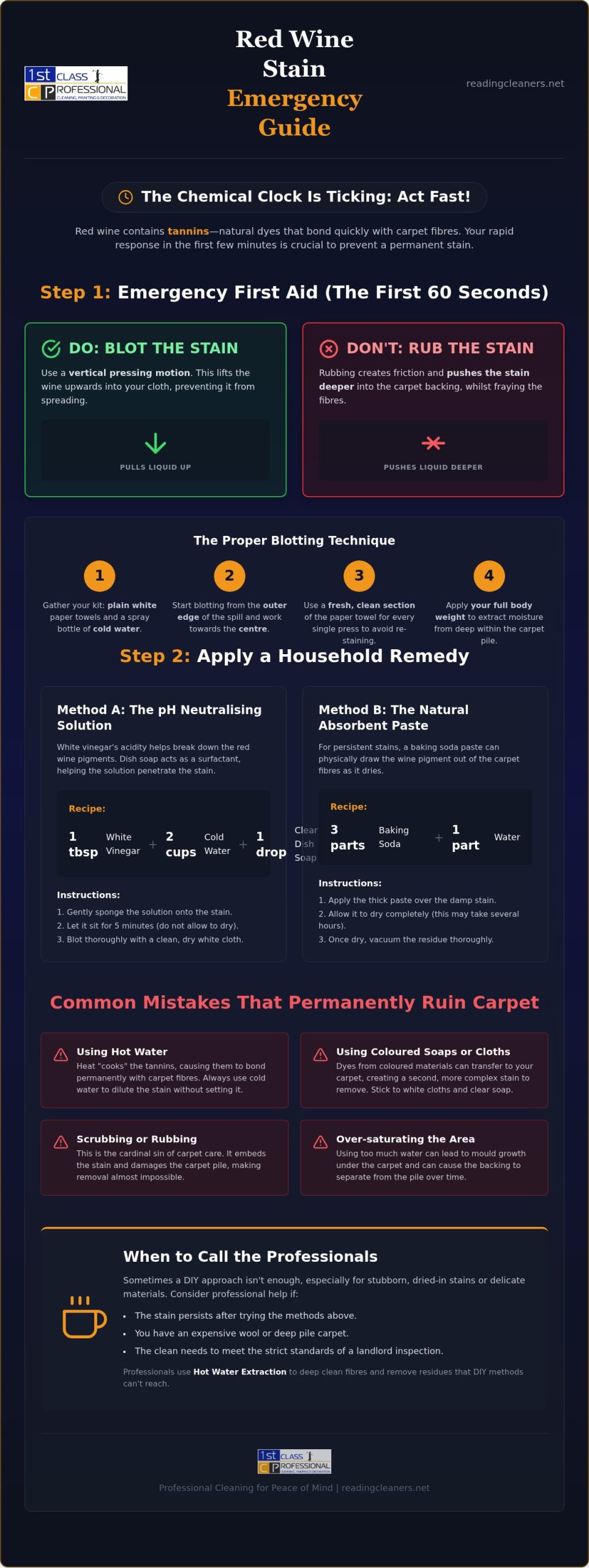
The moment a glass of wine hits the floor, a chemical clock starts ticking. Red wine contains tannins, which are natural vegetable dyes that bond quickly with porous carpet fibres. Understanding how stain removal works is essentially a race against these chemical bonds. If you’re currently asking “how do i get red wine out of carpet,” the answer begins with your reaction time in these first sixty seconds. Every second the liquid sits, it seeps further into the primary and secondary backing, making it much harder to reach with domestic tools later.
The Golden Rule of carpet care is simple: never rub the spill. Rubbing creates friction and heat, which pushes the liquid deeper into the backing and frays the delicate pile of the carpet. Instead, you must use a blotting motion, which is a vertical pressure technique designed to pull liquid upwards into an absorbent material. Using white paper towels is preferable to coloured cloths because it allows you to see exactly how much pigment is being lifted and ensures no secondary dyes transfer to your flooring.
Before you begin, gather your emergency kit. You don’t need complex chemicals yet; you simply need a stack of plain white paper towels, a spray bottle filled with cold water, and a heavy book to apply consistent pressure. Having these items ready prevents you from leaving the stain unattended whilst you rummage through cupboards.
The Proper Blotting Technique
Start at the outer edges of the spill and work your way towards the centre. This methodical approach prevents the liquid from migrating outwards and creating a larger “halo” stain. Use a fresh section of the paper towel for every single press. If you reuse a purple-soaked area, you’ll simply transfer the wine back into the carpet fibres. To be truly effective, apply your full body weight to the towel. This ensures you’re extracting moisture from the base of the pile, which is vital when figuring out how do i get red wine out of carpet before it sets.
Why Cold Water Beats Hot Water
Temperature is critical when dealing with organic spills. Whilst hot water is effective for breaking down grease, it’s a disaster for red wine. Heat “cooks” the tannins, causing them to bond permanently with the fabric. Cold water, however, dilutes the pigment without triggering this setting process. Use a spray bottle to mist the area lightly rather than pouring water directly from a cup. You want to dampen the stain to keep the pigment mobile without saturating the floor; excessive water can lead to mould or cause the carpet backing to separate over time.
The Best Household Remedies: Vinegar, Salt, and Baking Soda
Once you’ve finished the initial blotting, you’ll likely still see a pink or purple shadow remaining on the floor. This is the point where chemical neutralisation becomes necessary. Many people ask “how do i get red wine out of carpet” using only kitchen supplies, and the answer lies in understanding pH levels. According to the National Carpet Cleaners Association, using the correct household agent can prevent the pigment from becoming a permanent part of the fibre. Different wines require different levels of attention; a heavy, high-tannin Malbec presents a much tougher challenge than a lighter Pinot Noir because it contains a higher concentration of chromophores, the molecules responsible for deep colour.
The White Vinegar and Dish Soap Solution
White vinegar is an excellent acidic cleaner that helps break down the tannins in red wine. To create a safe and effective solution, mix one tablespoon of white vinegar with two cups of cold water. Adding a small drop of clear dish soap is vital. The soap acts as a surfactant, breaking the surface tension of the liquid so the vinegar can penetrate the stain effectively. It’s important to avoid coloured soaps, as their dyes can transfer to light-coloured carpets and create a secondary problem. Simply sponge the mixture onto the spot, let it sit for five minutes, and then blot with a fresh white towel.
Baking Soda: The Natural Absorbent
If the stain persists after using a liquid solution, a baking soda paste is a highly effective absorbent. Mix a 3:1 ratio of baking soda to water until it forms a thick, spreadable consistency. Apply this paste over the damp area and leave it until it’s completely dry, which can take several hours. This paste method is a common answer for those wondering how do i get red wine out of carpet when liquid cleaners aren’t enough. As the moisture evaporates, the soda draws the wine pigment out of the pile. Once it’s dry, vacuum the area thoroughly using a high-suction setting. If you’re dealing with a deep pile or expensive wool carpet, you might find that professional carpet cleaning services in Reading are a safer alternative to avoid leaving powdery residue behind.
Whilst salt is a traditional “emergency” remedy, it can be risky for many UK homes featuring wool-blend carpets. Salt crystals are abrasive and can get trapped in the backing, where they attract moisture and lead to premature wear or even mould. For synthetic fibres like polypropylene, salt is safer, but it should always be rinsed out completely to prevent a crunchy texture. Always test these remedies on an inconspicuous area first to ensure your carpet’s dye is stable.
Dealing with Dried Red Wine Stains: Is it Too Late?
Finding a dried red wine stain the morning after a party can feel like a disaster. Whilst fresh spills are a race against time, dried stains require a more patient, methodical approach to re-liquefy the pigment. If you’re wondering how do i get red wine out of carpet when it’s already crunchy to the touch, the first step is rehydration. By applying a damp, cold cloth to the area for several minutes, you can “wake up” the dried tannins, making them susceptible to cleaning agents once more. Dried stains are chemically different because the wine has had time to oxidise and bond with the carpet fibres; this often requires a solvent like glycerine to break the hardened crust before you can begin the extraction process.
The Hydrogen Peroxide Method (For Light Carpets Only)
For those with light-coloured synthetic carpets, a mixture of 3% hydrogen peroxide and a small amount of clear dish soap can be a powerful lifting agent. You should always test this in an inconspicuous area, such as under a sofa or behind a door, to ensure it doesn’t bleach the carpet’s base colour. This method is highly effective for breaking down the molecular structure of the red pigment. However, a significant warning is necessary: never use hydrogen peroxide on wool or dark-coloured carpets. It is a mild bleaching agent that will cause permanent discolouration and can damage natural protein fibres like wool.
Managing Reappearing Stains (Wicking)
A common frustration when learning how do i get red wine out of carpet is the “ghost stain” that reappears 24 hours later. This process, known as wicking, happens when liquid trapped deep in the carpet backing travels up the fibres as the surface dries. As the moisture evaporates at the tips, it pulls the remaining wine pigment to the surface. To prevent this, use the “weighted towel” method. Place a thick, clean white towel over the damp area and top it with a heavy object, like a stack of books, for several hours. This draws the deep-seated moisture into the towel instead of letting it settle at the tips of the pile. Keep in mind that leaving the carpet too damp for too long can lead to issues like carpet smells after cleaning, so ensuring a thorough dry is essential for a professional finish.
Common Mistakes that Permanently Ruin Your Carpet
Panic is the enemy of a clean floor. When faced with a dark spill, the most common reflex is to grab a cloth and start rubbing vigorously. This scrubbing disaster is often the reason why a simple spill becomes a permanent mark. If you’re searching for how do i get red wine out of carpet, you must resist the urge to use friction. Rubbing frays the individual fibres and pushes the wine pigment through the primary pile and into the secondary backing. Once the liquid reaches the base material, it’s much harder to extract, even with industrial machinery.
Another frequent mistake is falling for the white wine myth. Pouring white wine over a red spill doesn’t neutralise the pigment; it simply adds more liquid, acid, and grape sugars to the floor. This increases the size of the affected area and leaves a sugary residue that will attract grit and dust. Similarly, avoid the temptation to reach for a hair dryer or a domestic steam cleaner. Heat is a catalyst that bonds tannins to the fabric. If you apply heat to a fresh wine stain, you’re effectively dyeing the carpet permanently.
Fibre Distortion and “Fuzzing”
Vigorous rubbing permanently alters the physical structure of the yarn, a phenomenon known as fibre distortion or “fuzzing.” In Reading, many properties feature high-quality wool-blend carpets which are particularly delicate. Each yarn is twisted to provide durability and a specific finish. When you scrub, you unravel these twists. This creates a patch that looks dull and frayed, and since this is structural damage rather than a stain, it cannot be reversed. Synthetic polypropylene is tougher but can still melt or distort if exposed to the high temperatures of a steam iron or hair dryer.
Chemical Overload
Using too many products at once is another recipe for disaster. If you apply vinegar, then baking soda, then a store-bought foam, you’re creating a chemical cocktail that can damage the carpet’s factory-applied stain protection. Excessive soap is particularly problematic. If you don’t flush out every trace of detergent, it remains in the pile as a sticky film. This film attracts dirt every time someone walks over it, leading to a dark patch that reappears shortly after cleaning. If you’ve reached this stage, it’s best to consult a specialist carpet cleaning service in Reading to safely extract the residue and restore the pile.
When to Call Professional Carpet Cleaners in Reading
Whilst home remedies provide essential first aid, there are moments when domestic tools reach their limit. If you’ve followed the blotting and neutralisation steps but a stubborn shadow remains, the liquid has likely penetrated the primary backing. At this stage, the question “how do i get red wine out of carpet” requires a more powerful solution than kitchen cupboard staples can provide. For tenants in Berkshire, a visible stain isn’t just an eyesore; it’s a direct threat to a rental deposit. Engaging professional carpet cleaners Berkshire ensures that the pigment is physically extracted from the fibres rather than simply diluted or pushed deeper into the floor.
Industrial Extraction vs. DIY Machines
There’s a significant technical gap between a hired domestic machine and a professional truck-mounted or high-grade portable extraction system. Professional equipment provides vastly superior suction power, which is critical for removing the wine that has settled at the base of the pile. These machines also use controlled high-heat water that breaks down tannins without damaging the carpet’s structural integrity. Crucially, specialists use specialised pH-neutralising rinses. These rinses stabilise the carpet fibres and ensure no sticky detergent residue is left behind, preventing the rapid re-soiling issues that often plague DIY attempts. Because the suction is so much stronger, the carpet is left significantly drier, which almost entirely eliminates the risk of wicking or reappearing stains.
The Berkshire Deposit-Back Guarantee
For those moving house, the stakes are even higher. Reading landlords and letting agents typically require a high standard of cleanliness that DIY methods often fail to meet during a formal checkout inspection. Our end of tenancy cleaning Reading services are designed specifically to address these rigorous requirements, including professional-grade stain removal. Having a professional certificate as proof of service is often the only way to satisfy a landlord that a spill has been correctly treated. When booking an emergency clean in Reading, always ask your provider if they use hot water extraction and if they can provide a formal receipt for your records. This documentation serves as your final insurance policy against deposit deductions, giving you peace of mind that the “cure” for your carpet was as thorough as possible.
Restore Your Carpet to its Original State
Successfully removing a red wine spill depends on two factors: immediate action and the correct chemical approach. By prioritising blotting over scrubbing and using pH-neutralising agents like white vinegar, you can prevent most pigments from bonding permanently with the fibres. Understanding how do i get red wine out of carpet is the first step in protecting your flooring and securing your rental deposit. If the stain has reached the backing or you’re dealing with delicate wool, professional intervention remains the safest route to a complete recovery.
Our team provides specialised stain removal for Berkshire tenants, ensuring your home remains in peak condition. We use DBS-checked and fully insured cleaners who offer detergent-free, safe cleaning options tailored to your specific carpet type. Don’t let a single spill ruin your evening or your investment. Book an emergency professional carpet clean in Reading today and let our experts handle the deep extraction for you. With the right care and professional support, even the most daunting red wine stains can be completely resolved.
Frequently Asked Questions
Does white wine really get red wine out of carpet?
No, using white wine to treat a red wine spill is a common misconception that often worsens the problem. Whilst it may dilute the pigment slightly, you are essentially adding more grape sugars and acid to your flooring. This creates a sticky residue that attracts dirt and can lead to secondary staining. It’s much more effective to use cold water or a dedicated vinegar solution to lift the pigment without adding unnecessary contaminants to the pile.
Can I use salt on a dry red wine stain?
Salt is only effective on fresh, wet spills where it can physically absorb the liquid through capillary action. If the wine has already dried, salt will simply sit on the surface as an abrasive grit. To treat a dried mark, you must first rehydrate the area with a damp cloth or a mist of cold water. Only then can you begin the process of lifting the pigment using the methods outlined in our guide.
What is the best household item for red wine removal?
White vinegar mixed with a small amount of clear dish soap is widely considered the most effective household solution. The vinegar’s acidity helps to break down the tannins in the wine, whilst the soap acts as a surfactant to pull the liquid away from the fibres. This combination provides a safe way to address the question of how do i get red wine out of carpet without resorting to aggressive or bleaching chemicals.
Will red wine ever come out of a white carpet?
Red wine can be removed from white carpets, but the success rate depends heavily on the material. Synthetic white carpets often respond well to a diluted hydrogen peroxide solution, which breaks down the red chromophores. However, for white wool carpets, you should avoid DIY bleaching agents and instead opt for professional hot water extraction. This ensures the pigment is lifted entirely without leaving a permanent yellow or grey shadow on the pristine fibres.
How much does professional red wine stain removal cost in Reading?
The cost for professional stain removal in Reading varies depending on the size of the affected area and the type of carpet fibre involved. Many local specialists include stain treatment as part of a wider room clean or as a specific call-out service. For residents wondering how do i get red wine out of carpet whilst protecting their home, professional quotes are usually based on the severity of the spill and the required equipment and time.
Is baking soda or vinegar better for red wine stains?
Both items serve different purposes in the cleaning process. Vinegar is a chemical neutraliser that breaks the bond between the wine and the carpet. Baking soda is a physical absorbent that draws moisture and pigment out of the floor as it dries. For the best results, you should use a vinegar solution to treat the stain first, followed by a baking soda paste to lift any remaining deep-seated moisture from the backing.
Can I use a steam cleaner on a red wine spill?
You should never use a domestic steam cleaner on a fresh red wine spill. The high temperature of the steam will “cook” the tannins into the carpet fibres, effectively dyeing them permanently. Professional “steam cleaning” actually refers to hot water extraction, which uses controlled temperatures and high-powered suction. For a DIY approach, stick to cold water and manual blotting to ensure you don’t accidentally set the stain into the floor forever.
How do I know if I have permanently ruined my carpet?
You can tell a carpet is permanently damaged if the texture has changed or the colour has shifted significantly. If the fibres look frayed, matted, or “fuzzy,” you have likely caused structural damage through over-scrubbing. Additionally, if the red pigment has turned a dark brown or black after you’ve applied heat or chemicals, the tannins have likely bonded permanently. In these cases, a professional assessment is required to see if restoration is still possible.